
modelExercise1GasTurbine
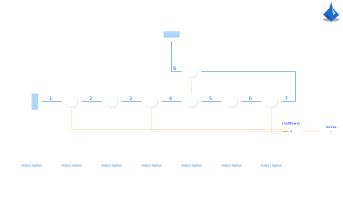
Extends from Modelica.Icons.Example (Icon for runnable examples).
Information
English problem description
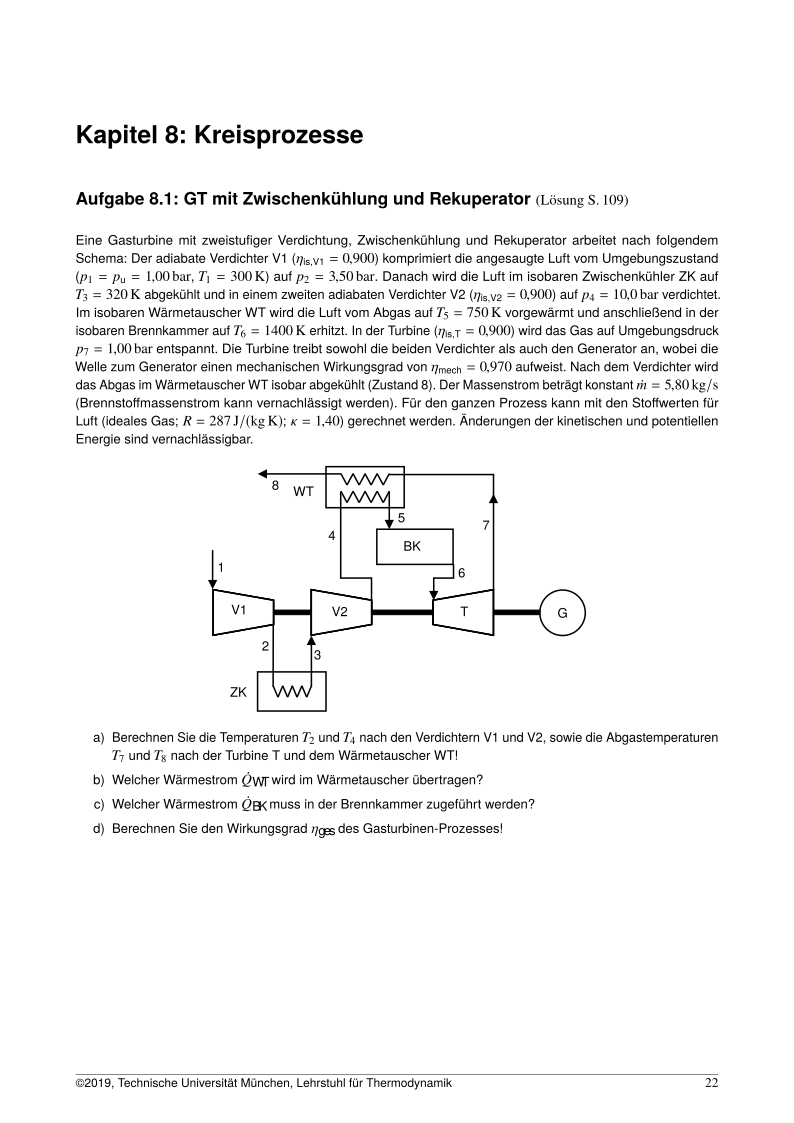
A gas turbine features a two-stage compression with intercooling and a recuperator.
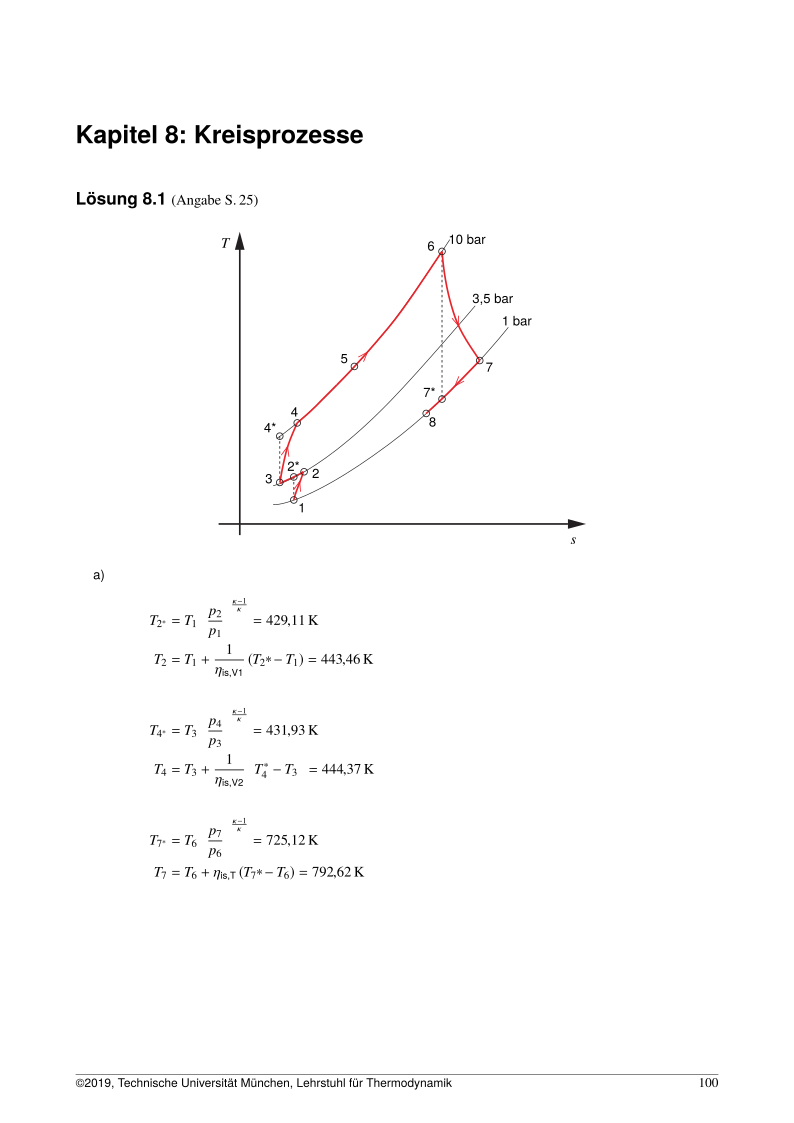
Ambient air (1.00 bar, 300 K) is first compressed in the adiabatic
lowPressureCompressor (eta_is = 0.9) to 3.50 bar.
Subsequently, the air is cooled isobarically in the cooler to 320 K
before entering the highPressureCompressor, where it is further compressed
(eta_is = 0.9) to 10.0 bar.
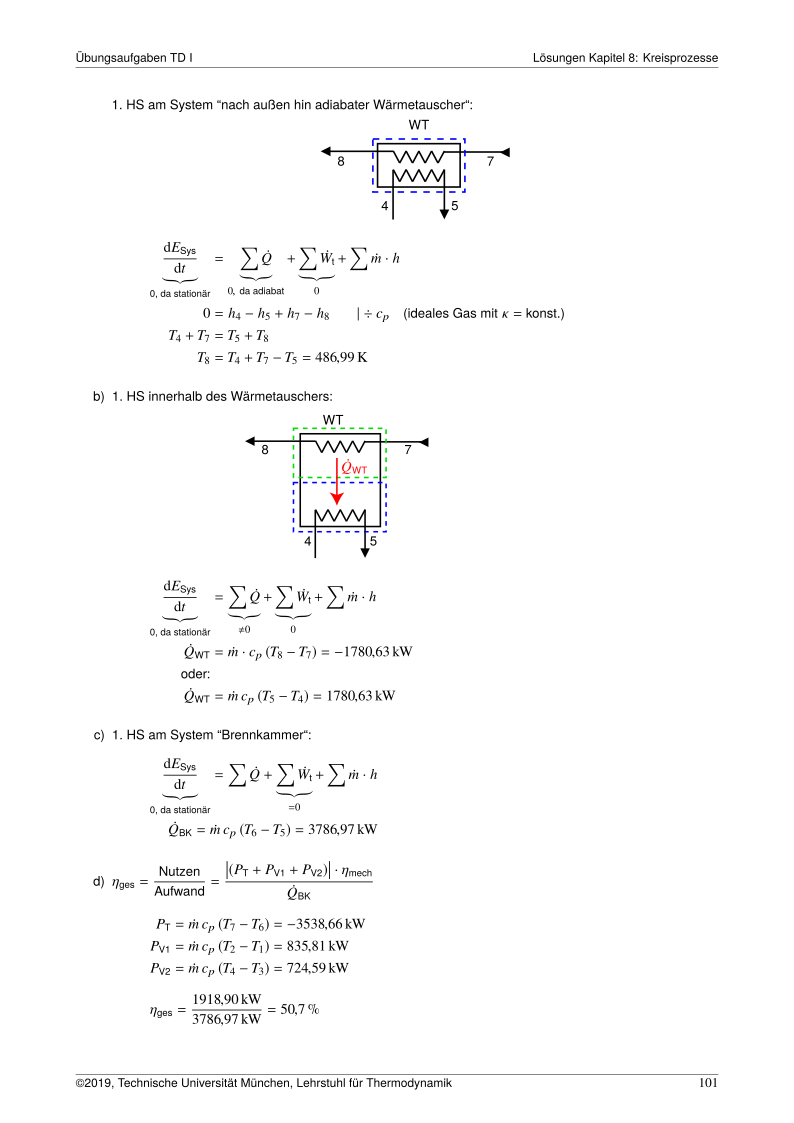
The compressed air is then preheated in the isobaric heat exchanger recuperatorA
using turbine exhaust gases, increasing its temperature to 750 K.
In the isobaric combustion chamber, the temperature is raised further to
1400 K. The hot gas expands in the turbine
(eta_is = 0.9) down to ambient pressure (1.00 bar).
The turbine supplies power to both compressors and the generator, with a mechanical
shaft efficiency of eta = 0.970.
Downstream of the turbine, the exhaust gas is cooled isobarically in the heat exchanger
recuperatorB. The mass flow rate is assumed constant at
5.80 kg/s, neglecting the contribution of the fuel mass flow.
Possible modifications
The following aspects can be varied for further analysis:
-
The medium model:
-
SimpleAir:
perfect gas with constant isobaric heat capacity and isentropic exponent
(
R = 287 J/(kg.K),gamma = 1.40) -
DryAirNasa:
ideal gas with temperature-dependent
cpandgamma -
ReferenceMoistAir:
ideal mixture of air and water; the water mass fraction
Xmust be specified in thesource
-
SimpleAir:
perfect gas with constant isobaric heat capacity and isentropic exponent
(
-
The adiabatic thermodynamic model
(
FullMedium,IdealGasConstantGamma, orPerfectGas), see UsersGuide.AdiabaticThermodynamicModels .
Known issues
-
MoistAir cannot be used,
as it is restricted to temperatures below the critical point of water (
647 K). -
ReferenceAir
(e.g.
ReferenceAir.Air_ph) fails when used with the FullMedium thermodynamic model, but works with the other formulations.
Components
Contents
| Name | Description |
|---|---|
 Medium Medium |
Revisions
-
2026, by Raphael Gebhart (raphael.gebhart@dlr.de):
Initial version.