
packageExercise5TurboChargedDieselEngine
Extends from Modelica.Icons.ExamplesPackage (Icon for packages containing runnable examples).
Information
This package contains examples of a turbocharged diesel engine cycle.
The examples use the SimpleAir medium
model (perfect gas with constant cp) and the process model
PolytropicPerfectGas.
They differ by the system specification (Cycle and Flow) and by the solution method: implicit nonlinear equations vs. pseudoInversion "controllers".
English problem description
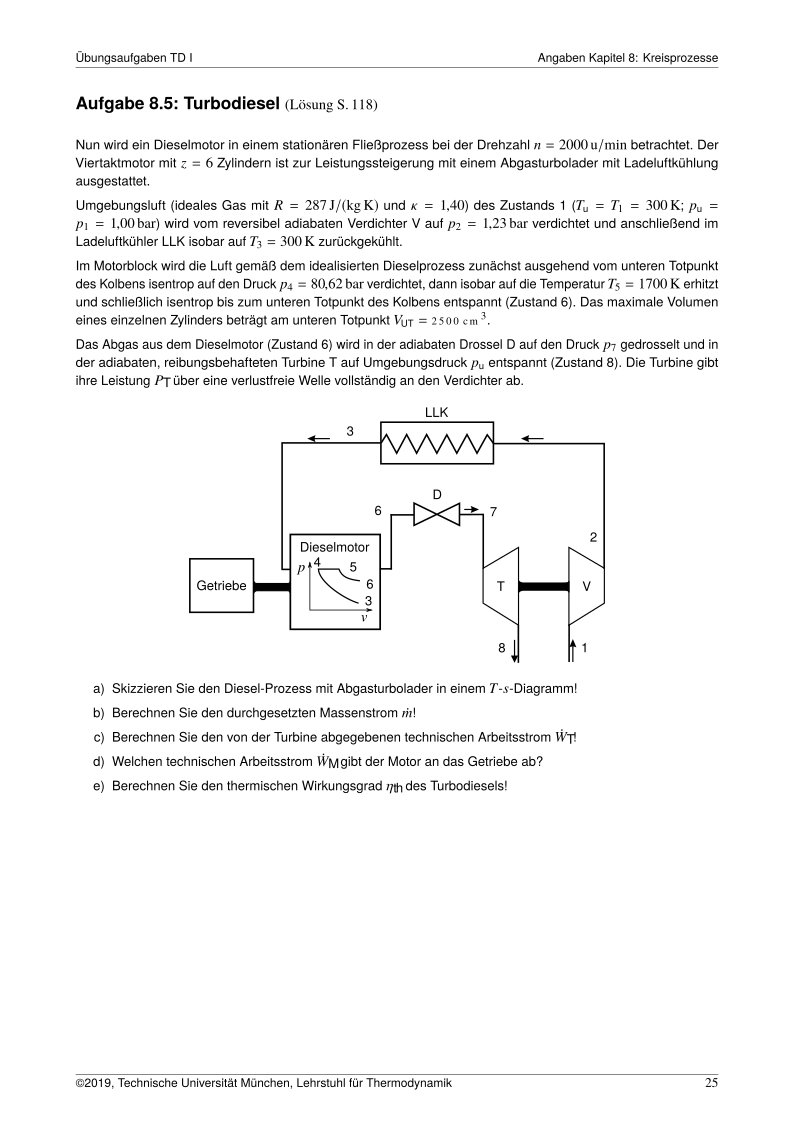
A stationary flow process with a diesel engine operating at a rotational speed of
n = 2000 rpm is considered. The four-stroke engine with z = 6 cylinders
is equipped with a turbocharger and intercooler to increase power output.
Ambient air at state 1
(300 K, 1.00 bar) is compressed in the reversible adiabatic
compressor to 1.23 bar, and then cooled isobarically in the
cooler to 300 K.
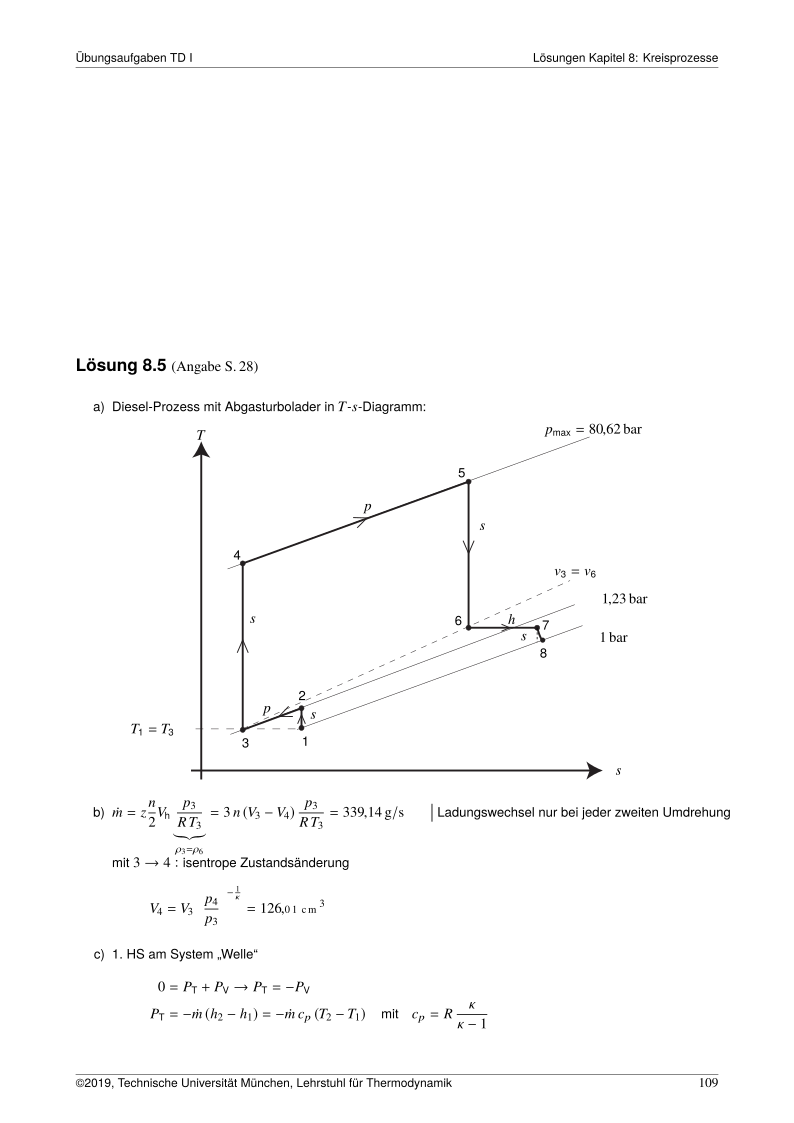
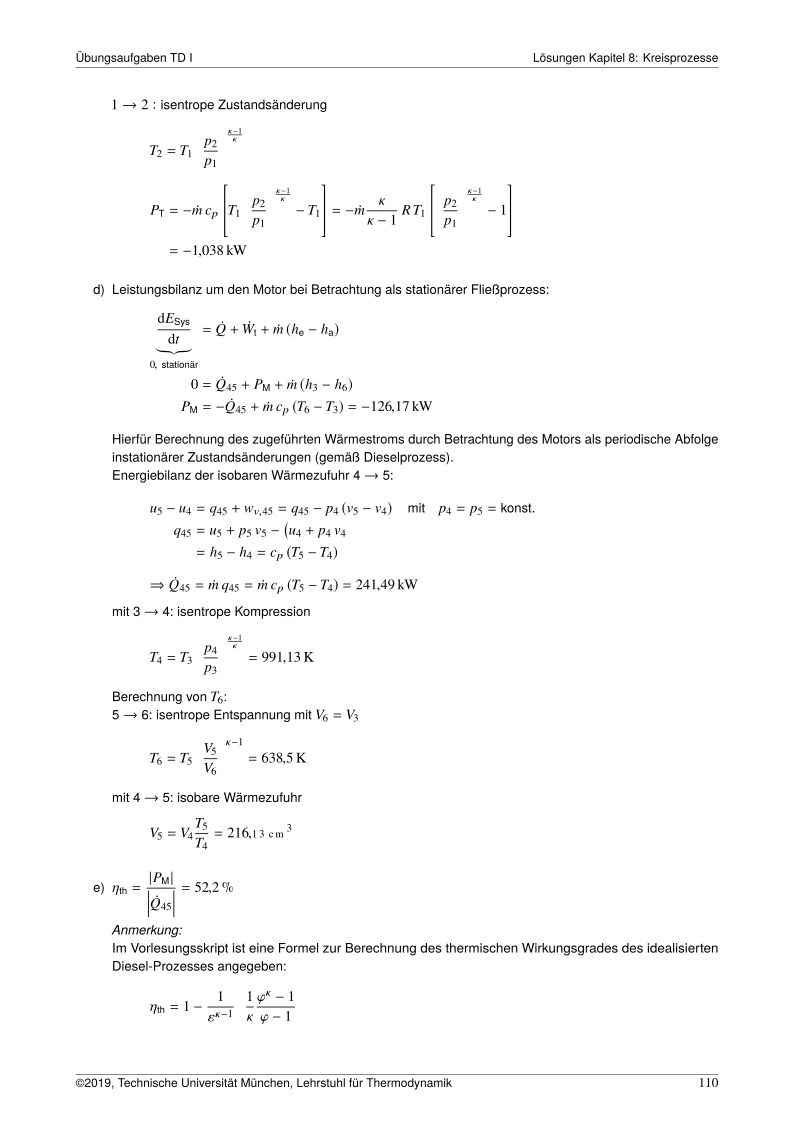
In the engine block, the air undergoes an idealized Diesel process: starting from the bottom dead
center of the piston, it is first compressed isentropically to 80.62 bar (engineCompression),
then heated isobarically to 1700 K (combustion), and finally expanded isentropically back
to the bottom dead center (engineExpansion, state 6). The maximum volume of a single cylinder at the bottom dead
center is 2500 cm3.
The exhaust gas from the diesel engine is throttled in the adiabatic valve and expanded in the adiabatic, frictional turbine to ambient
pressure. The turbine delivers its power completely to
the compressor via a lossless shaft.
Contents
| Name | Description |
|---|---|
 Cycle Cycle | Turbocharged diesel engine |
| Flow | Turbocharged diesel engine |
| CyclePseudoInversion | Turbocharged diesel engine |
| BaseModel | Defines the parameters |
Revisions
-
2026, by Raphael Gebhart (raphael.gebhart@dlr.de):
Initial version.